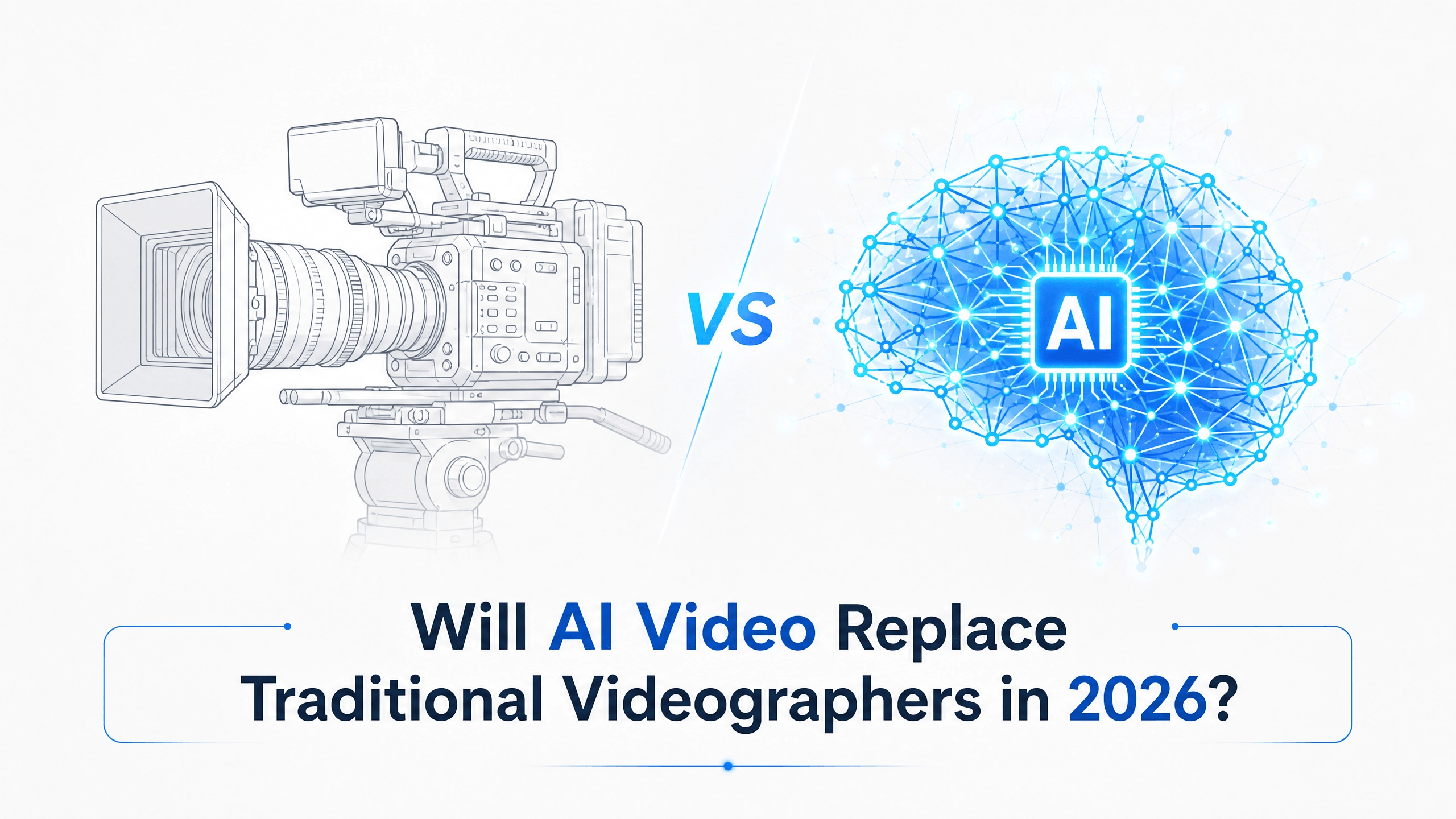
The explosive evolution of AI video generation technology has sparked a heated industry debate across 2026. With modern AI video generation tools capable of producing cinematic footage, commercial advertisements, and high-quality short videos in minutes, countless content creators and industry observers are asking one critical question: will AI videos completely replace traditional videographers and manual video production workflows? While AI video creation has achieved unprecedented popularity and efficiency breakthroughs, the reality of industry replacement is far more nuanced than most viral online claims. This honest industry analysis breaks down the strengths and limitations of AI-generated video, the irreplaceable value of professional videographers, and the real industry pattern that will dominate video creation in 2026 and beyond.
1. Why AI Video Is Rapidly Disrupting the Traditional Video Industry
In just a few years, AI video technology has overturned the traditional video production ecosystem that has existed for decades. Previously, completing a professional commercial video or creative short film required a complete team configuration, including videographers, lighting engineers, post-editors, and color graders, along with expensive shooting equipment and lengthy production cycles. Today, advanced AI cinematic video generators can complete the whole process from scene creation and lens shooting to color grading and frame synthesis with only text prompts.
The core competitive advantage of AI lies in ultra-high efficiency and ultra-low trial-and-error costs. Traditional video shooting requires on-site arrangement, equipment debugging, repeated shooting and lengthy post-production, which often takes days or even weeks to complete a single work. In contrast, AI video generation can output multiple versions of high-quality works in a few minutes, perfectly adapting to the fast iteration needs of social media content, brand short-term marketing, and creative trial production. For small and medium-sized enterprises, individual creators, and startup teams with limited budgets, affordable and efficient AI video tools have become the first choice for content production, gradually replacing a large number of basic manual shooting and editing work.
From the perspective of basic video creation, AI has already formed a strong substitution effect on repetitive, standardized, and low-creative video work, which is also the core reason for the industry’s widespread sense of "replacement crisis".
2. The Irreplaceable Core Value of Traditional Professional Videographers
Despite the powerful capabilities of 2026 AI video technology, professional videographers still hold irreplaceable core competitiveness in high-end video creation scenarios. The fundamental difference between manual shooting and AI video generation lies in "human thinking and emotional perception", which AI algorithms cannot simulate and replicate in the short term.
First of all, professional videographers have unique creative thinking and emotional expression ability. Excellent video works are not just a combination of perfect frames and smooth lenses, but a carrier of emotions, stories, and brand connotations. Videographers can adjust shooting angles, light atmosphere and rhythm logic in real time according to on-site changes, emotional atmosphere and creative themes, injecting unique temperature and storytelling into the work. Current AI models can only generate content based on existing data and fixed algorithms, lacking independent creative insight and on-site flexible adaptation capabilities.
Secondly, high-end commercial shooting, documentary recording and personalized customized video creation require real on-site interaction and scene control. For brand large-scale promotional videos, real-person documentary scenes, wedding recordings, and film and television drama shooting, on-site environment, character emotions and scene details are ever-changing. Professional videographers can capture fleeting wonderful moments and adjust shooting strategies in real time, while AI can only generate preset virtual scenes, unable to complete real scene recording and dynamic interactive shooting.
In addition, senior videographers have accumulated rich industry experience and aesthetic judgment. They can accurately grasp brand positioning, audience preferences and market trends, and carry out targeted creative planning and video polishing. Most AI videos are limited by training data, prone to homogeneous styles and rigid creative logic, and cannot meet the personalized and high-end aesthetic needs of top commercial creation.
3. Where AI Video Cannot Compete With Manual Shooting in 2026
Through in-depth industry verification and practical testing, we can clearly summarize the inherent shortcomings of AI-generated video, which are also the core barriers that prevent AI from completely replacing traditional videographers.
AI lacks real logical cognition and scene understanding. All AI video frames are synthesized and predicted based on big data simulation, without real understanding of scene logic, physical interaction and emotional logic. This leads to subtle unnatural flaws in AI works, such as unreasonable object interaction, illogical detail changes and lack of emotional resonance, which are difficult to eliminate fundamentally.
AI is unable to complete high-precision customized creative iteration. High-end video creation requires continuous communication, adjustment and personalized optimization according to customer needs and creative feedback. Professional videographers can flexibly modify creative ideas and work details according to diversified demands, while AI generation is limited by prompt settings and model algorithms, with low flexibility in personalized customized creation.
Homogenization is an inevitable problem of mass AI creation. A large number of AI videos generated based on the same training data and algorithm logic will appear similar in style, lens and tone, lacking unique creative characteristics. Excellent manual shooting works have distinct personal style and creative uniqueness, which is the key to winning high-end market recognition.
4. The Real Future Pattern: Coexistence Rather Than Replacement
After analyzing the advantages and disadvantages of both sides, the conclusion of the 2026 video creation industry is very clear: AI video will not replace traditional videographers, but will eliminate backward, inefficient and repetitive basic video workers, and finally form a new industry pattern of "AI assistance + manual refinement".
In the future industry ecosystem, AI will undertake all basic work: rapid material generation, creative trial production, basic lens splicing, standardized color grading and mass content production, helping creators greatly improve efficiency and reduce costs. Professional videographers will be liberated from repetitive mechanical work, focusing more on core links such as creative planning, emotional polishing, personalized customization and high-end work creation.
For modern video practitioners, refusing AI and sticking to traditional old workflows will eventually be eliminated by the industry; blindly believing that AI can replace manual creation is also an unrealistic misunderstanding. The real industry competitiveness lies in mastering AI tools to empower manual creativity, combining the efficiency advantages of AI video generation tools with the unique creative temperature of human beings.
5. Final Verdict
In 2026 and the future, AI video is a powerful productivity tool for the video industry, not a terminator of traditional professions. It subverts backward production methods, optimizes industry efficiency, and lowers the threshold of basic video creation, but it cannot replace human creativity, emotional insight and personalized customized service capabilities. The ultimate development trend of the video industry is the integration and coexistence of AI technology and manual creation, bringing more diversified, high-quality and high-efficiency visual works to the market.